It was the best of times, it was the worst of times, it was the age of wisdom, it was the age of foolishness, it was the epoch of belief, it was the epoch of incredulity, it was the season of light, it was the season of darkness, it was the spring of hope, it was the winter of despair, we hadPhiladelphia asked Benjamin Franklin, "Well, Doctor, what have we got, a republic or a monarchy?" With no hesitation whatsoever, Franklin responded, "A republic, if you can keep it." ~ BENJAMIN FRANKLIN 1787
To read more of The Economist’s data journalism visit our Graphic detail page.
Children are a very high proportion of the victims of war in Gaza. According to the Palestinian health ministry, around 3,000 children were killed in the first 17 days of the war—roughly 40% of the total death toll. Although there are some concerns that number could be inflated—the health ministry is run by Hamas and President Joe Biden said that he has “no notion that Palestinians are telling the truth about how many people are killed”—the ministry’s estimates have been broadly accurate in previous conflicts. According to the World Bank, there are 322 live births daily in the West Bank and Gaza, also daily the estimated 165 increase in population daily. The difference is the number of deaths, there are exceptions.
In Ukraine, a conflict between two much bigger powers, children account for fewer than 550 of roughly 9,800 civilian fatalities over a much longer period. Gaza’s enormous child death toll reflects, among other things, its especially youthful demography. About half of the population of the Palestinian territories is younger than 20 years old, a much higher share than the average of other upper-middle income countries such as Iraq, Namibia and Thailand.
The basis of a youthful society is a high fertility rate, the number of children a typical woman will have in her lifetime. According to the UN Population Division, the rate in the Palestinian territories, including both Gaza (total population 2m) and the West Bank (3m), was 3.4 in 2021. From 2017 to 2019 the Palestinian Central Bureau of Statistics (pcbs) put it at 3.8. Detailed data that disaggregate Gaza and the West Bank are hard to come by. But, according to the pcbs, Gaza’s fertility was 3.9 during that period. These rates are far higher than those of neighboring Israel, Jordan, or Egypt and comparable to those of Ghana or Congo, both much poorer countries.
According to the World Bank, in 2023, an average of 250 people are born every minute and 110 people die every minute around the world. This means that there is a net gain of 140 people per minute.
However, it is important to note that these numbers are just averages and can vary significantly from country to country. For example, in sub-Saharan Africa, the birth rate is much higher than the death rate, while in Europe and Japan, the death rate is higher than the birth rate.
Here are some additional facts about global births and deaths:
The highest birth rate in the world is in Niger, where an average of 47.3 babies are born per 1,000 people each year.
The lowest birth rate in the world is in South Korea, where an average of 5.1 babies are born per 1,000 people each year.
The highest death rate in the world is in Lesotho, where an average of 27.6 people die per 1,000 people each year.
The lowest death rate in the world is in Monaco, where an average of 5.5 people die per 1,000 people each year.
It is also important to note that the global population is expected to continue to grow in the coming decades, reaching an estimated 9.7 billion people by 2050. This growth will be driven by a number of factors, including declining death rates and increasing life expectancy.
A fertility rate this high is typically associated with short lifespans, poverty and low levels of female education. The Palestinian territories do not have those characteristics. Average income per person in the territories is $4,600 a year, higher than in Egypt and Jordan. (The figure for Gaza is thought to be considerably lower.) More girls than boys are enrolled in secondary education. The Palestinian territories are unusual in combining poor-country fertility with upper-middle-income social characteristics.
Why? It seems likely that the long conflict with Israel and the influence of Hamas (which runs Gaza but not the West Bank) are partly responsible. Yasser Arafat, the former president of the Palestinian Authority, once said his people were conducting “a war of cradles”: population growth was a way to affirm Palestinian identity and perseverance. Hamas’s pro-natal rhetoric has been particularly vociferous. After taking control of Gaza in 2007 it sought to maintain the strip’s high fertility rate; which stood at 5.8 from 1999 to 2003, one of the highest anywhere.
Fertility has fallen since, as it has almost everywhere. But Gazans born in the baby boom of 20 years are now having their own families. In 2015 Gaza had about two thirds the population of the West Bank, the historic centre of Palestine. At current rates, it will be near parity within 25 years, giving Gaza a bigger voice in the debate over any future Palestinian state. ■
About half of the population of the Palestinian territories is younger than 20 years oldhttps://econ.st/3SiLrcF
A child killed on average every 10 minutes in Gaza, says WHO chief
Israel has vowed to wipe out Hamas, which rules the Gaza Strip, after an October 7 attack in southern Israel in which it says the militants killed around 1,200 people.
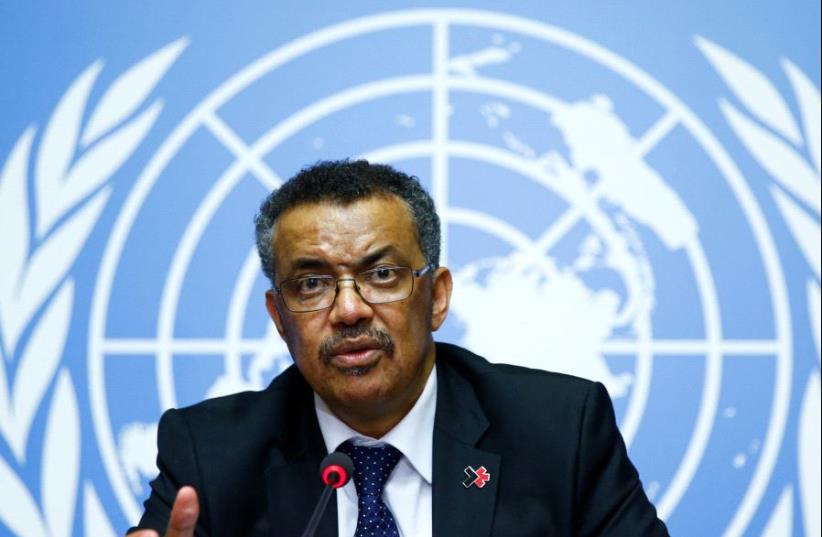
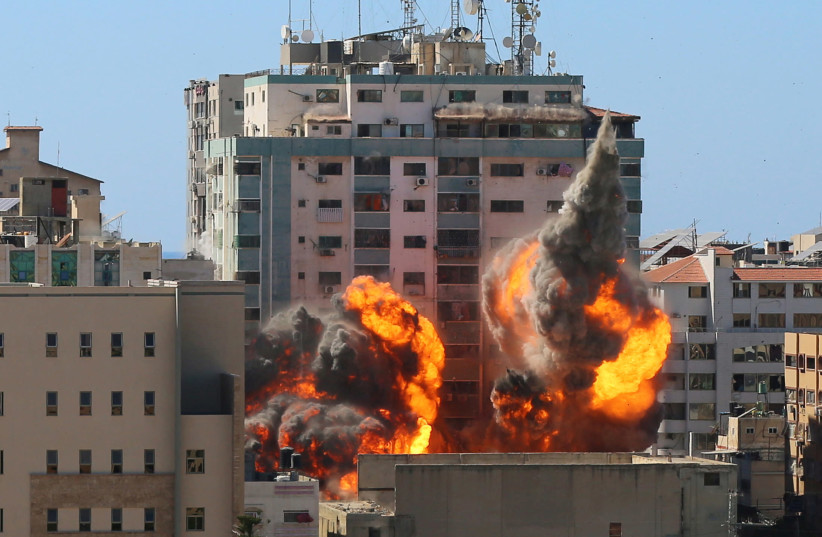
Newly elected Director-General of the World Health Organization (WHO) Tedros Adhanom Ghebreyesus attends a news conference at the United Nations in Geneva, SwitzerlandA child is killed on average every 10 minutes in the Gaza Strip,World Health OrganizationDirector-General Tedros Adhanom Ghebreyesus told the United Nations Security Council on Friday, warning: "Nowhere and no one is safe."He said that half ofGaza's 36 hospitalsand two-thirds of its primary healthcare centers were not functioning and those that were operating were way beyond their capacities, describing the healthcare system as being "on its knees.""Hospital corridors crammed with the injured, the sick, the dying. Morgues overflowing. Surgery without anesthesia. Tens of thousands of displaced people sheltering at hospitals," Tedros told the 15-member council.Israel has vowed to wipe out Hamas, which rules the Gaza Strip, after an October 7 attack in southern Israel in which it says the militants killed around 1,200 people and took more than 240 hostages. Israel has struck Gaza - an enclave of 2.3 million people - from the air, imposed a siege and launched a ground invasion."On average, a child is killed every 10 minutes in Gaza," Tedros said.An explosion is seen near a tower housing AP, Al Jazeera offices during Israeli missile strikes in Gaza city, May 15, 2021. (credit: ASHRAF ABU AMRAH / REUTERS)
Since October 7, the WHO has verified more than 250 attacks on healthcare in Gaza and the West Bank, while there had been 25 attacks on healthcare in Israel, Tedros said. Israel says Hamas hides weapons in tunnels under hospitals, charges Hamas denies.
Israel's UN Ambassador Gilad Erdan told the Security Council that Israel had created a taskforce to establish hospitals in southern Gaza. On October 12, Israel ordered some 1.1 million people in Gaza to move south ahead of its ground invasion.
"Israel is in advanced talks with the United Arab Emirates, with the ICRC and with other European countries regarding the establishment of field-hospital and floating-hospital ships," Erdan said. "Israel facilitated the Jordanian airdrop of medical aid to hospitals in northern Gaza."
"Sadly, Israel is doing far more for the well-being of Gazans than the WHO or any other UN body," he said.
The United States is working to try and get fuel to hospitals in Gaza, said deputy US Ambassador to the UN Robert Wood, stressing that civilian and humanitarian facilities must be respected and protected under international law.
Hamas is using Gazans as hostages and human shields
Wood said Hamas had been using the civilian population as hostages and as human shields.
"These cowardly tactics do not diminish Israel's responsibility to distinguish between civilians and terrorists in its fight against Hamas," he said. "The risks of harm to civilians at sites that Hamas is using for military purpose absolutely have to be considered when planning an operation."
The Security Council stood for a moment of silence at the start of the meeting to remember civilians killed in Israel and Gaza, along with 101 people working with the UN Palestinian refugee agency (UNRWA).
Tedros recalled growing up during war in Ethiopia, saying he understood what the children of Gaza must be going through.
"The sound of gunfire and shells whistling through the air, the smell of smoke after they struck, tracer bullets in the night sky, the fear, the pain, the loss – these things have stayed with me throughout my life," he said.